
 Available in US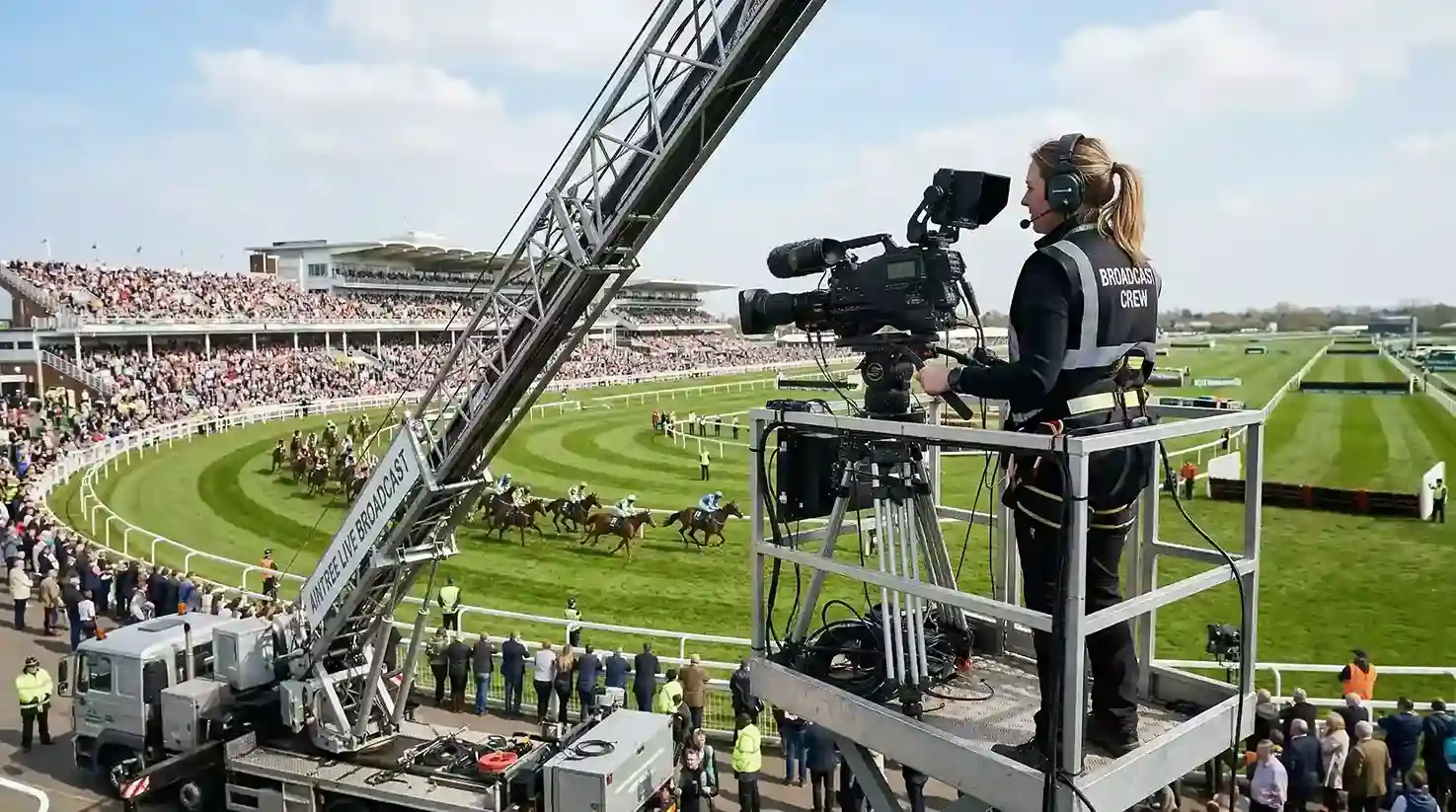
The Grand National is one of the most watched sporting events on earth. In 2025, approximately 600 million people worldwide tuned in to watch 34 horses navigate Aintree’s four miles of fences, while 5.2 million watched on ITV in the UK alone. In 2024, the estimated global audience reached 800 million across 170 countries. These are numbers that place the Grand National alongside the FIFA World Cup final, the Super Bowl, and the Olympic 100-metre final in terms of sheer eyeball reach. The world watches Aintree, and that audience is the engine that drives the race’s extraordinary betting market.
For bettors, the broadcast infrastructure is more than background viewing. The scale of the Grand National’s media exposure directly shapes the betting market: it attracts casual money, drives promotional activity, and creates the conditions in which value can be found by those paying closer attention than the average viewer.
Grand National TV Coverage and Viewing Figures — More on this topic at grand national betting odds.
UK Coverage: ITV Schedule and Digital Options
ITV holds the exclusive free-to-air broadcast rights for the Grand National and the wider Aintree Festival. Coverage on Grand National Saturday typically begins in the early afternoon, building through the undercard races with studio analysis, interviews, and the traditional parade ring inspections before the main event. The race itself, scheduled for late afternoon, is the centrepiece of ITV’s racing coverage for the year.
ITV’s digital platform, ITVX, provides a live stream of the broadcast for viewers who are not near a television. The stream is free and does not require a subscription, which makes it accessible to anyone with an internet connection. For bettors, the live stream is a useful complement to a betting app — you can watch the build-up, assess the horses in the parade ring, and place your bet from the same device, all within the final minutes before the off.
Racing TV and Sky Sports Racing provide additional coverage of the Aintree Festival across all three days, with more detailed form analysis, course walks, and trainer interviews than the ITV broadcast offers. These channels require a subscription but are valuable for bettors who want to analyse the undercard races on Thursday and Friday before committing to their Grand National selections on Saturday. The Topham Chase on Friday — run over the Grand National fences — is particularly worth watching live, as it provides real-time evidence of how horses handle the unique Aintree obstacles.
Global Reach: 600 Million Viewers
The Grand National’s global audience is staggering for a horse race. The 600 million figure for 2025 and the 800 million cited for 2024 reflect broadcast deals that span 170 countries across every continent. The race is shown live in Ireland, France, Australia, the United States, Japan, and dozens of other markets, each with its own commentary and pre-race coverage.
The global reach is driven by several factors. The Grand National has a uniquely accessible narrative — the world’s most famous steeplechase, 34 horses, four miles, chaos, and drama — that translates across cultures far more effectively than most horse races. It does not require specialist knowledge to appreciate. A viewer in Tokyo or Toronto who has never seen a jump race before can understand the spectacle of Becher’s Brook, the drama of the final fence, and the emotional intensity of the run to the line.
The international audience also drives international betting. The Grand National is one of the few British horse races that generates significant betting volume outside the UK, particularly in Ireland, Australia, and South Africa, where horse racing cultures are well established. Licensed international operators offer Grand National markets to their local customers, and the global betting volume on the race — difficult to quantify precisely — adds a substantial supplement to the estimated £250 million wagered in the UK.
Social media has extended the broadcast’s reach beyond traditional television. Clips of the race — the start, the key fences, the dramatic finish — circulate on platforms within minutes of the race ending, reaching audiences who did not watch live but are drawn in by the spectacle. This secondary exposure sustains the Grand National’s cultural presence between annual runnings and ensures that each year’s race begins with a baseline of public awareness that no amount of marketing could replicate from scratch. For the betting market, this perpetual visibility is what keeps the Grand National as the one race where non-racing people feel confident enough to place a bet.
How Broadcast Reach Fuels the Betting Market
The relationship between television coverage and betting volume is not coincidental — it is causal. The Grand National’s status as the UK’s biggest betting event is inseparable from its status as one of the UK’s most watched television programmes. ITV’s broadcast brings the race into living rooms across the country, many of which contain people who would never seek out horse racing on their own. The combination of accessible storytelling, expert analysis, and the social tradition of “having a flutter on the National” converts viewers into bettors at a rate that no other race achieves.
The timing of the broadcast is engineered to maximise this conversion. Pre-race coverage includes tipster segments, form summaries, and betting guides that explicitly encourage viewers to place a bet. The integration of betting odds into the broadcast graphics — showing each horse’s price alongside its name — normalises the act of betting as part of the viewing experience. And the ease of mobile betting means that the gap between watching a tip on ITV and placing the bet on a phone app is measured in seconds, not minutes.
For serious bettors, the broadcast-driven influx of casual money is a feature, not a bug. When millions of viewers simultaneously bet on horses recommended by ITV’s on-screen experts, those horses shorten in the market. The horses that are not featured — the runners that do not get a mention in the studio segment, that do not have a compelling backstory for the cameras — drift to longer prices. If your analysis has identified value in one of those overlooked runners, the television broadcast is actively creating the conditions in which that value exists.
Key Takeaway
The Grand National’s television coverage — 5.2 million UK viewers on ITV, up to 800 million globally — is the foundation of its betting market. The broadcast attracts casual money, drives promotional activity, and creates systematic price distortions that informed bettors can exploit. Watch the ITV coverage for the atmosphere and the final form assessments, but recognise that the horses featured most prominently on screen are also the horses absorbing the most casual money. The value often lies in the runners the cameras do not linger on.
See also Grand National Economics.
