
 Available in US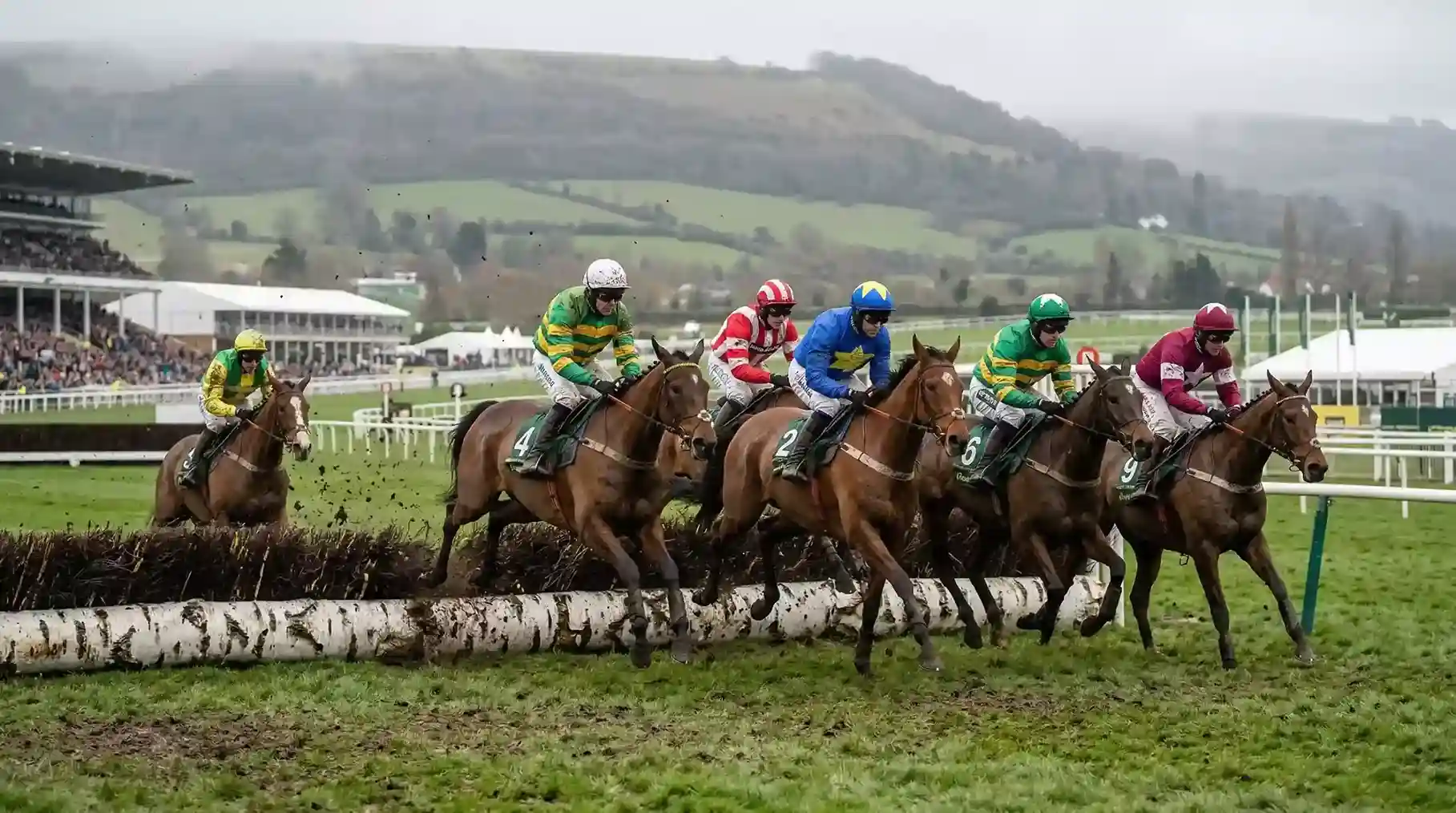
The Cheltenham Festival takes place in mid-March. The Grand National is run in early April. Three weeks separate the two events, and in those three weeks the Grand National betting market undergoes its most violent reshuffling of the entire ante-post season. Horses that were 40/1 outsiders before Cheltenham can be cut to 16/1 overnight. Others that were prominent in the market can drift to double their original price after a poor showing at Prestbury Park. If you want to understand how Grand National odds are formed in their final, critical phase, you need to understand Cheltenham.
This is not coincidence. The Cheltenham Festival is the highest-quality jump racing meeting in the calendar, attracting the best horses from Britain and Ireland across four days of championship-level competition. Several of its races serve as direct trials for the Grand National — not officially, but in practice, because the stamina, jumping, and class demands at Cheltenham overlap significantly with what Aintree asks three weeks later. March form, April glory: it is a pattern that repeats year after year.
Cheltenham Festival Form and Grand National Odds Link — More on this topic at grand national betting odds.
Key Cheltenham Races That Feed Into Grand National Odds
The Ultima Handicap Chase, run on the opening day of the Festival over three miles and one furlong, is the single most relevant Cheltenham race for Grand National form. It is a competitive handicap over fences at a distance that tests stamina without being a true marathon, and its field typically includes several horses with Grand National entries. A strong run in the Ultima — particularly a close second or third at a big price — frequently triggers a significant shortening in Grand National odds within hours of the result.
The Cross Country Chase is another key trial, though its relevance is different. Run over Cheltenham’s unique cross-country course, which features banks, ditches, and a variety of non-standard obstacles, it rewards bold jumping and adaptability rather than raw galloping speed. Tiger Roll used the Cross Country as his Grand National warm-up in both his winning years, and the race has a track record of identifying horses whose jumping temperament suits the idiosyncratic demands of Aintree. A horse that handles the Cross Country’s variety of obstacles tends to cope well with Becher’s Brook and the Canal Turn.
The National Hunt Chase, a four-mile novice event, tests stamina over the longest distance at the Festival. Winners and placed horses from this race occasionally go on to run in the Grand National in subsequent years, and a strong performance here is an early indicator that a young horse has the engine for Aintree’s four-mile test. The Kim Muir Challenge Cup, an amateur riders’ handicap chase over three miles and two furlongs, serves a similar purpose — its competitive, grinding nature produces horses toughened by the experience of a gruelling Cheltenham handicap.
Even races that seem unrelated can have indirect effects. If a leading Irish trainer sends his best horse to win the Gold Cup on Friday, the attention and resources devoted to that campaign sometimes mean his Grand National runners have been given lighter preparations — a detail the market does not always price in.
Case Studies: How Cheltenham Moved the Market
The 2026 ante-post market provides a live example. Johnnywho, a lightly raced chaser with strong Aintree entries, was available at 40/1 for the Grand National before the Cheltenham Festival. A close and eye-catching run in the Ultima — travelling strongly before being outpaced on the final hill — saw his Grand National price slashed to 16/1 within 24 hours. The horse had shown the jumping fluency and stamina that bookmakers and sharp punters recognised as Grand National-ready. For anyone who had taken the 40/1 ante-post price, Cheltenham confirmed what they had suspected; for those who had not, the value had evaporated overnight.
Tiger Roll’s Grand National campaigns illustrate the pattern in reverse. In 2019, he won the Cross Country Chase at Cheltenham and was already a short-priced favourite for the National. Cheltenham did not so much move his price as cement it — he started the Grand National at 4/1, the shortest-priced favourite in years, and duly won. The market treated his Cheltenham performance as confirmation rather than new information, which is unusual but reflects how dominant he was in that phase of his career.
A less well-known example is One For Arthur in 2017. He did not run at Cheltenham at all, and while several of his Grand National rivals were having hard races at Prestbury Park, he was freshened up at home in Scotland. The market barely adjusted his price — he went off at 14/1 — partly because the absence of Cheltenham form meant there was no new data point to react to. He won the National comfortably, raising the question of whether skipping Cheltenham can itself be a positive indicator, preserving a horse’s energy for the bigger target three weeks later.
Reading Cheltenham Form for Aintree Advantage
The most useful Cheltenham form for Grand National purposes is not the winning form — it is the placed and close-up form. A horse that finishes second or third in a competitive Cheltenham handicap, beaten a few lengths after jumping well throughout, is often a better Grand National prospect than the winner, who may have left too much energy on the Cheltenham hills. The BHA’s data on Premier Fixtures shows that average betting turnover per race at major meetings rose by 1.1% year-on-year, while turnover on ordinary fixtures dropped by 8.1% — evidence that bettors are increasingly concentrated on big-event form, and Cheltenham-to-Aintree is the most heavily traded pipeline in jump racing.
Look specifically for horses that showed stamina at Cheltenham. The Festival’s emphasis on speed up the final hill can mask a horse’s staying ability — a runner that was outpaced late at Cheltenham over three miles may well have more to give over Aintree’s four miles, where the pace is less ferocious and endurance counts for more. The Ultima and National Hunt Chase runners who weakened late at Cheltenham but jumped well throughout are prime Grand National candidates.
Ground conditions matter in this transition too. Cheltenham in March often rides Soft or Heavy, particularly on the final two days. If a horse handles those conditions well but the Aintree forecast is Good, you may see a drift in that horse’s Grand National price as the market adjusts for going preference. Conversely, a horse that struggled on Cheltenham’s deep ground but has form on better surfaces might see its Aintree odds shorten if the weather cooperates. The three-week gap between the festivals gives punters time to assess these variables, but the market does not always react efficiently to going changes until race week.
The entry count itself tells a story. With Grand National entries having fallen from 126 in 2015 to just 78 in 2026, the pool of potential runners is smaller and more concentrated. That means Cheltenham form has an outsized effect on a thinner market — fewer horses means each data point from the Festival moves the odds more dramatically than it would have a decade ago, when the Grand National entry list was nearly twice as long.
Key Takeaway
Cheltenham Festival is the Grand National’s dress rehearsal, and ignoring its results is one of the most common mistakes in Grand National betting. Watch the Ultima, the Cross Country, and the National Hunt Chase. Focus on placed horses rather than winners. Check how each runner handled the ground and whether they have more to give over an extra mile. And if you have identified a Grand National selection before Cheltenham, be ready to act on confirmation or to reassess if the evidence changes. The three weeks between March form and April glory are when the smartest ante-post decisions are made.
See also Grand National Free Bets and Offers.
