
 Available in US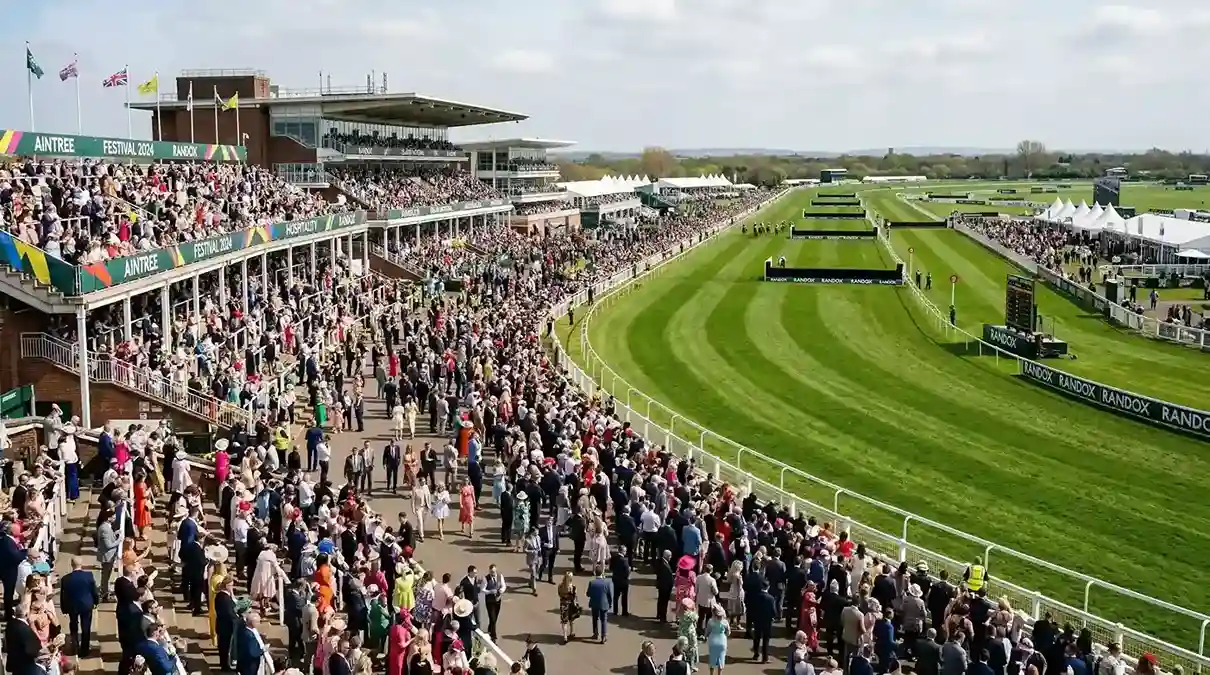
The Grand National is the headline act, but it is one race on one day of a three-day festival that offers some of the best jump racing in the calendar. The Aintree Festival typically attracts around 150,000 visitors across Thursday, Friday, and Saturday, and the undercard programme features Grade 1 races, competitive handicaps, and trial events that directly feed into the Grand National itself. Treating Aintree as three days, not just one race opens up a range of betting opportunities that the once-a-year punter rarely considers — and that the value-conscious bettor should not overlook.
Each day has its own character. Thursday is the racing purist’s day, headlined by the Aintree Hurdle and the Bowl Chase. Friday — officially Ladies Day — combines the social spectacle with the Melling Chase and the Topham Chase over the Grand National fences. Saturday is the main event, but the Grand National undercard includes high-quality races that are often better betting propositions than the National itself, precisely because they attract less casual money and the market is sharper.
Aintree Festival Betting — More on this topic at grand national betting odds.
Day 1: Thursday’s Key Races
Thursday opens the festival with a card built around two Grade 1 events. The Aintree Hurdle, run over two miles and four furlongs, is a championship-calibre contest that regularly features the best hurdlers from Cheltenham making the short trip north. It is a race where form is relatively reliable — the smaller field and the absence of Grand National-style chaos make it a more predictable betting proposition. Horses that ran well at Cheltenham three weeks earlier often confirm that form at Aintree, and the market prices them accordingly.
The Betway Bowl, a Grade 1 chase over three miles and one furlong, serves as the premier staying chase of the meeting. It attracts high-class chasers who are too good for handicap company but may not have stayed the Gold Cup distance at Cheltenham. For bettors, the Bowl is an opportunity to assess the quality of the chasing division on a course that shares some of Aintree’s unique characteristics — the big fences, the left-handed track, the undulating terrain — without the extreme distance and field size of the National.
Thursday also features the Manifesto Novices’ Chase, an important race for young staying chasers. Horses that perform well here sometimes reappear in Grand National entries in subsequent years, making it a useful reconnaissance event for long-range National watchers. The field is smaller, the form is cleaner, and the betting market on Thursday’s races is typically much tighter than on the Grand National itself — less casual money, less noise, more value for informed punters.
Day 2: Ladies Day Programme
Friday’s racing card is anchored by the Melling Chase, a two-mile-five-furlong Grade 1 event that attracts some of the fastest chasers in training. This is a speed contest — the antithesis of the Grand National’s stamina test — and it regularly produces spectacular racing. From a betting perspective, the Melling is one of the more formful races at the Festival. Small fields, high-class horses, and consistent ground conditions make it a race where the best horse usually wins, and the market reflects that with shorter-priced favourites than you will see on Saturday.
The Topham Chase is Friday’s most directly relevant race for Grand National enthusiasts. It is run over the Grand National fences, though at a shorter distance of two miles and five furlongs. The Topham provides live evidence of how horses handle Becher’s Brook, the Canal Turn, and the other unique Aintree obstacles, making it a real-time form guide for anyone still finalising their Grand National selections. A horse that jumps boldly and handles the drop fences in the Topham is demonstrating exactly the attributes the Grand National demands. Conversely, a horse that struggles at Becher’s on Friday is a red flag for Saturday.
The Topham is also a competitive handicap in its own right, with a decent prize fund and a large field — often 20 or more runners. The betting market on the Topham offers something the Grand National’s market does not: a manageable field size where form analysis can be applied with more confidence. Many experienced Aintree bettors consider the Topham the best betting race of the entire festival, precisely because it combines Grand National-style obstacles with a more predictable competitive dynamic.
Day 3: The Full Grand National Undercard
Saturday’s card is not just the Grand National. The undercard includes the Mersey Novices’ Hurdle, the Maghull Novices’ Chase, and several competitive handicaps that are run before the main event. These races attract quality fields and offer genuine betting value, partly because the overwhelming majority of media and public attention is focused on the 5:15 National, leaving the earlier races underanalysed and underbet by the casual audience.
The Maghull Novices’ Chase, run over two miles, is a Grade 1 event that often features future champions. Horses that win here have gone on to compete at the highest level in subsequent seasons, and the race is a valuable pointer for long-term form analysis. From a pure betting perspective, Grade 1 novice chases tend to be dominated by one or two clearly superior horses, making them simpler to assess than the wide-open Grand National.
The handicap hurdle races on Saturday’s card deserve particular attention from value-seeking bettors. These events draw competitive fields of 12 to 18 runners, offer decent prize money, and are priced by bookmakers who are understandably focused on their Grand National liabilities. The result is that handicap hurdles on Grand National Saturday are often among the least efficiently priced races of the entire festival — a genuine edge for anyone willing to do the form analysis while the rest of the country is debating whether to back the favourite at 7/1 or the outsider with the nice name.
The Grand National itself carries a prize fund of £1 million, with the winner receiving approximately £561,000. But the undercard races collectively distribute substantial prize money too, and the quality of competition on Saturday’s full card makes Aintree one of the richest single-day programmes in British racing. For bettors who arrive at the festival with a budget, allocating a portion to the undercard — where the markets are sharper and the analysis cleaner — is often a more productive use of funds than concentrating everything on the 34-runner feature.
Key Takeaway
The Aintree Festival is a three-day event with a full programme of high-quality racing, and the Grand National — for all its cultural dominance — is only one part of it. Thursday’s Grade 1 races, Friday’s Topham Chase over the National fences, and Saturday’s undercard all offer betting opportunities where form is more reliable, fields are more manageable, and the market is less distorted by casual money. If you are travelling to Aintree or following the meeting from home, give the undercard the attention it deserves. The best bet of the festival might not be in the Grand National at all.
See also Grand National Prize Money 2026.
