 Available in US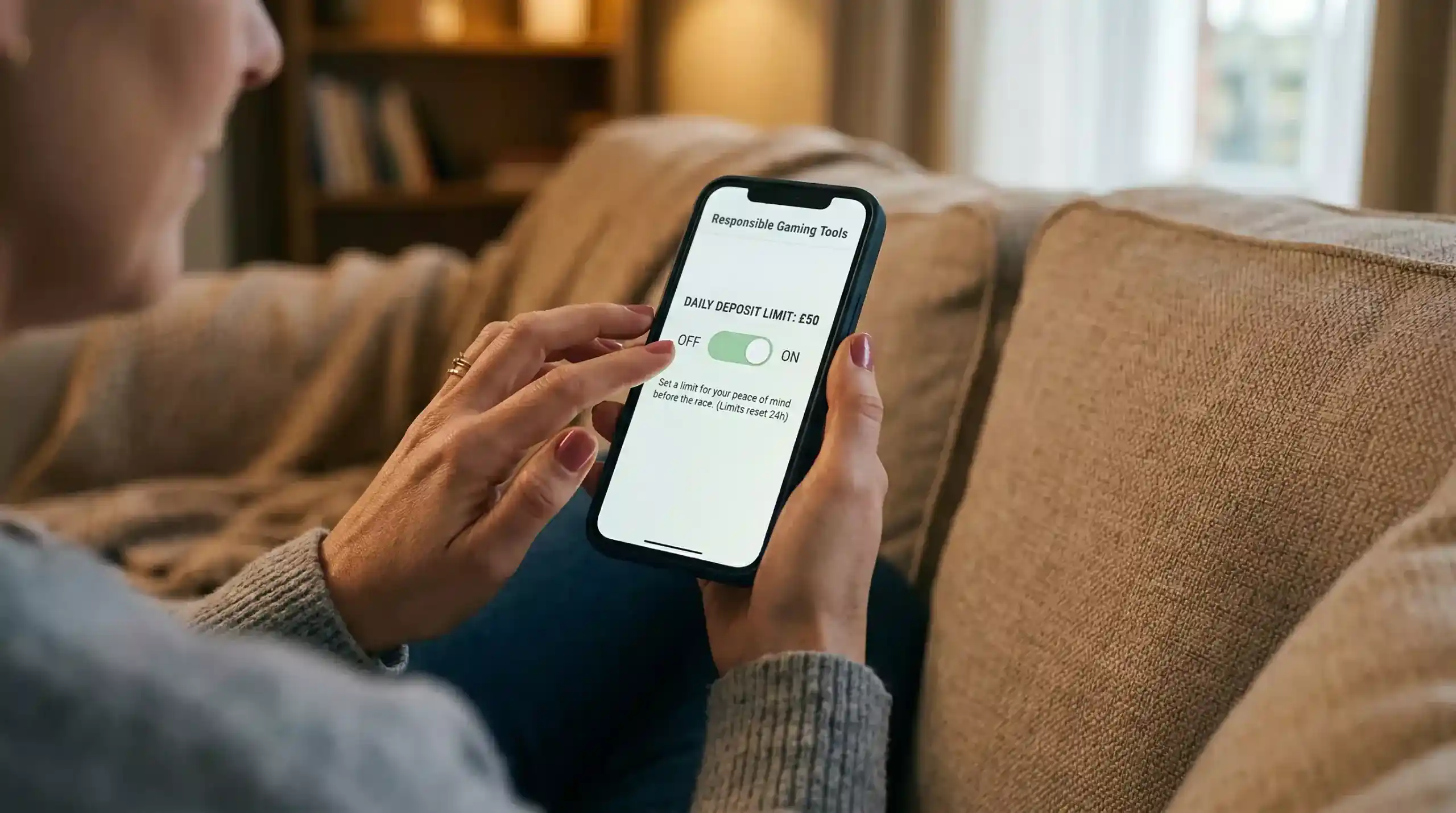
The Grand National is the most widely bet-on event in the British sporting calendar, drawing in millions of people who do not gamble at any other time of year. For the vast majority, it is a harmless, enjoyable tradition — a few pounds on a horse, an afternoon of excitement, and either a small win or an entertaining loss. But the same characteristics that make the Grand National so accessible — the enormous media coverage, the ease of mobile betting, the social pressure to join in — can also make it a trigger for people who are vulnerable to gambling-related harm. Betting should stay fun, and keeping it that way requires awareness of the tools available to you before you place your first bet.
According to Gambling Commission survey data, approximately 7% of UK adults had placed a bet on horse racing in the four weeks before the survey — a figure that spikes sharply around the Grand National and Cheltenham Festival periods. That seasonal surge brings in a population of bettors who are less experienced with gambling products and less familiar with the tools designed to help them stay in control. This guide is for them — and for anyone who wants to make sure their Grand National experience remains positive.
Grand National Responsible Gambling — More on this topic at grand national betting odds.
Practical Tools: Deposit Limits, Time-Outs, Self-Exclusion
Every licensed UK bookmaker is legally required to offer a set of responsible gambling tools. The most immediately useful is the deposit limit. You can set a maximum amount that can be deposited into your account over a given period — daily, weekly, or monthly. For the Grand National, a daily deposit limit equal to the amount you have decided you can afford to lose is the simplest safeguard. Once the limit is reached, you cannot add more funds until the next period, regardless of what is happening on the track.
Deposit limits can be lowered at any time, and the change takes effect immediately. Increasing a deposit limit, by contrast, requires a cooling-off period — typically 24 hours — before the higher limit becomes active. This asymmetry is deliberate: it prevents impulsive increases during a losing streak while allowing immediate decreases if you decide mid-afternoon that you have spent enough.
Time-out periods temporarily suspend your account. You can set a time-out for 24 hours, 48 hours, a week, or longer. During the time-out, you cannot log in, place bets, or deposit funds. For someone who knows they have a pattern of chasing losses after a bad day, activating a time-out on the evening of Grand National Saturday prevents any follow-through on that impulse. The account reopens automatically at the end of the period.
Self-exclusion is the most comprehensive option. Through GAMSTOP, the national self-exclusion scheme, you can block yourself from all licensed UK gambling websites for six months, one year, or five years. This is a serious step intended for people who feel their gambling is out of control. It is not designed for casual Grand National bettors — but knowing it exists, and knowing that help is available at that level, is itself a form of protection.
Warning Signs of Problem Gambling
Problem gambling does not always look like the dramatic portrayals in films and documentaries. More often, it begins quietly: a bet that was supposed to be fun becomes an obligation, a loss that was supposed to be affordable starts to sting, a thought pattern shifts from “this is entertainment” to “I need to win this back.” The Grand National, as a high-profile event surrounded by social encouragement to bet, can amplify these early signals in people who are already on the edge.
Specific warning signs include spending more on betting than you planned despite setting a budget, feeling anxious or irritable when not betting, hiding the amount you have lost from family or friends, borrowing money to fund bets, and returning to bet the next day specifically to recover yesterday’s losses. None of these signs in isolation constitutes a diagnosis, but any one of them is a signal worth paying attention to. The Grand National is one afternoon — if the thought of not betting on it produces genuine distress, that reaction is more revealing than the bet itself.
An estimated £10 million of Grand National wagers in 2025 went to unlicensed operators who offer no responsible gambling tools at all. For anyone already concerned about their gambling, the first and most important step is to stay within the licensed market, where deposit limits, time-outs, and self-exclusion are available as standard. The second step is to use those tools proactively, before you feel you need them.
Where to Get Help: GambleAware, GamCare, National Gambling Helpline
GambleAware is the leading charity in Britain for gambling-related harm. It funds research, education, and treatment, and its website provides information on recognising problem gambling and accessing support. GamCare operates the National Gambling Helpline, which offers free, confidential advice and support by phone and online chat. The helpline is staffed by trained advisors who can help with practical steps — setting limits, accessing treatment, navigating self-exclusion — as well as providing a listening ear for anyone who is worried about their gambling or someone else’s.
For those who prefer digital support, GamCare also operates an online forum where people can share experiences and advice anonymously. The NHS provides gambling addiction services through its treatment network, and referrals can be made through a GP or self-referral. These services are free, confidential, and available to anyone — including people who bet only once a year on the Grand National.
It is also worth noting that support is available for people affected by someone else’s gambling, not just for the person who gambles. Partners, family members, and friends who are concerned about a loved one’s betting behaviour can contact GamCare for guidance on how to raise the subject, what practical steps to suggest, and how to access family-oriented support services. The Grand National’s cultural prominence means it often surfaces gambling-related tensions that exist year-round — and addressing those tensions is easier when you know where to turn.
Key Takeaway
Responsible gambling on the Grand National is not about avoiding betting. It is about betting within your means, using the tools that licensed bookmakers are required to provide, and recognising early if the experience stops being enjoyable. Set a deposit limit before Grand National Saturday. Know the warning signs of problem gambling. And if you or someone you know needs support, the help is there — free, confidential, and one call away. The Grand National is a brilliant spectacle. The only way it stops being one is if the bet costs more than you can afford.
See also Grand National Betting Odds Calculator.
