
 Available in US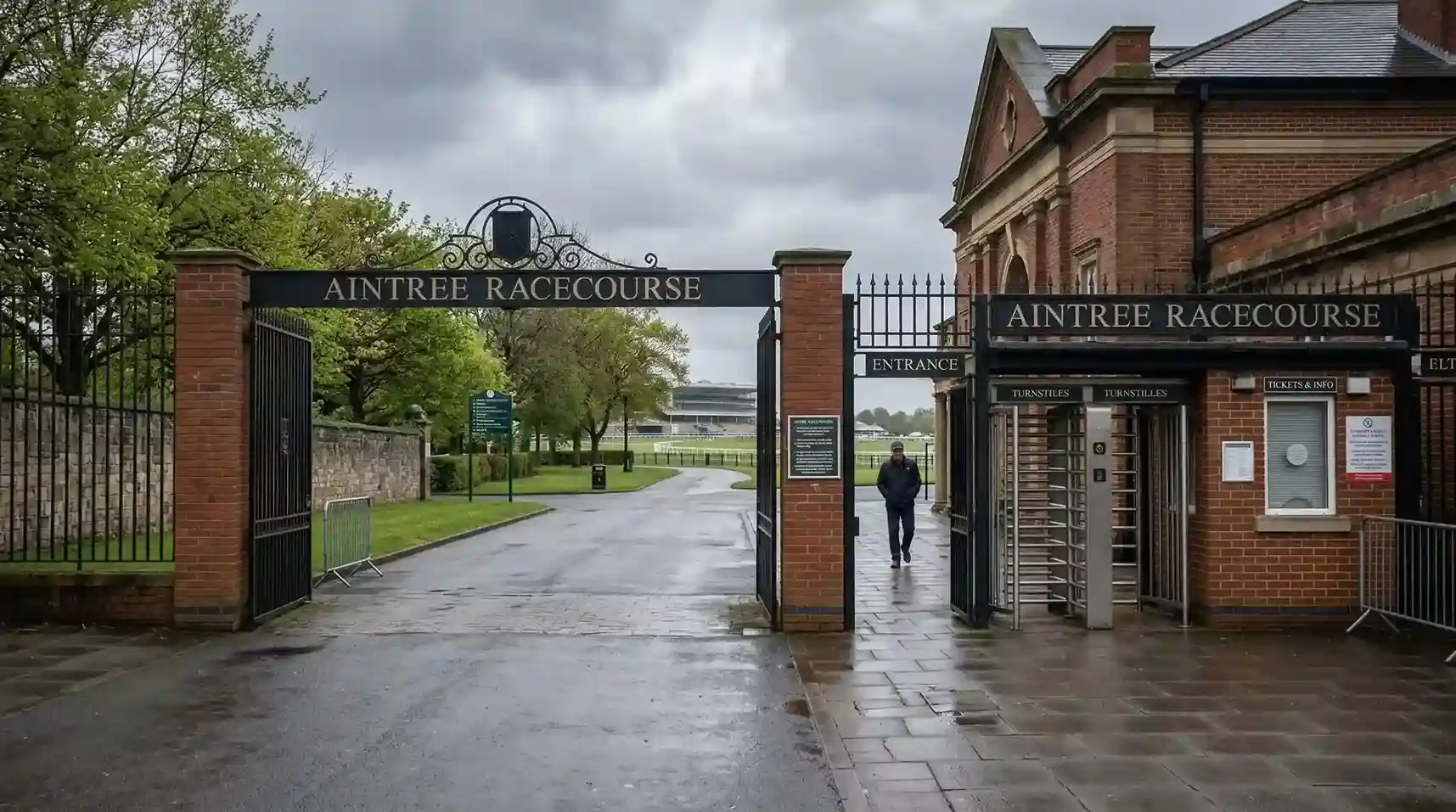
Few issues in British gambling have generated as much heat — and as little consensus — as affordability checks. The concept is simple in principle: before a customer is allowed to bet above certain thresholds, their bookmaker should assess whether they can afford the potential losses. In practice, the implementation has divided regulators, operators, the racing industry, and bettors themselves. For Grand National punters, the impact is tangible. The way you bet, the amount you can stake, and the experience of using a licensed bookmaker have all been reshaped by affordability checks — and the question of whether this amounts to protection or punishment depends largely on where you sit in the market.
The debate matters because its consequences are not theoretical. Betting turnover on British horse racing has fallen measurably since affordability measures were introduced, and the BHA’s Racing Report for 2024 documented a 6.8% year-on-year decline in overall turnover — a trend the authority attributes in significant part to the impact of financial risk checks on customer behaviour.
Affordability Checks and Grand National Betting Impact — More on this topic at grand national betting odds.
How Financial Risk Checks Work
The Gambling Commission’s framework for financial risk checks operates at two thresholds. A light-touch check is triggered when a customer’s net deposits reach a specified level — currently under consultation but expected to land around £125 to £150 over a rolling period. This check draws on publicly available data such as credit reference files to verify that the customer’s spending pattern is broadly consistent with their financial profile. It does not require the customer to submit documents and is designed to be frictionless.
A more detailed check is triggered at a higher threshold and may involve the customer providing evidence of income — payslips, bank statements, tax returns. This is the stage that has generated the most opposition. For customers who bet regularly and at meaningful stakes, the requirement to share personal financial information with a bookmaker feels intrusive and disproportionate. Many report account restrictions or closures following a request for documentation, either because they declined to provide it or because the bookmaker interpreted the data conservatively.
For the Grand National specifically, the light-touch threshold is relevant even for moderate bettors. A customer who deposits £100 to fund their Grand National betting — a perfectly normal amount for someone placing two or three each-way bets across the festival — may find themselves close to or above the trigger point, depending on their recent deposit history with that bookmaker. The check itself may be invisible and automatic. But for some customers, it results in a reduced maximum stake, a restriction on certain bet types, or a request for further information that disrupts their Grand National betting experience at the worst possible time.
The timing of the Grand National amplifies the issue. The race falls in April, typically near the end of the spring jump racing season. A customer who has been betting throughout the National Hunt campaign — Cheltenham in March, weekend meetings in January and February — may arrive at Grand National week already close to or beyond the deposit threshold for the year. The check is cumulative, not event-specific: it does not distinguish between a committed racing enthusiast and a problem gambler, and the system treats both in the same way. For once-a-year bettors who only deposit around Grand National time, the threshold is far less likely to be an issue — their low-frequency pattern does not trigger the same flags.
Impact on Horse Racing Turnover
The numbers are clear, even if their interpretation is contested. Overall betting turnover on British horse racing fell by 6.8% year-on-year in the BHA’s full-year 2024 report. By the end of Q3 2025, turnover was running 4.2% below the equivalent period in 2024, and 12.8% below 2023. The average turnover per race declined by 5.8% year-on-year. These are significant drops in a market that was growing consistently before affordability checks were introduced.
The BHA’s data reveals a particularly telling split. Average turnover per race at Premier Fixtures — the highest-profile meetings including Aintree, Cheltenham, and Royal Ascot — actually rose by 1.1% year-on-year. At Core Fixtures — the everyday bread-and-butter meetings — turnover fell by 8.1%. The implication is that bettors are concentrating their activity on major events, where the perceived value of the experience justifies the friction of the affordability process, and withdrawing from routine racing, where the hassle is not worth the reward.
The Grand National sits firmly in the Premier Fixture category, which means its betting volume has been more resilient than the broader market. But resilience is not immunity. The industry’s concern is that the ongoing tightening of affordability thresholds will eventually erode even the premium end of the market, as customers who are repeatedly subjected to checks decide that the experience of betting with a licensed UK bookmaker is no longer worth the intrusion.
Industry Reaction and the £250m Forecast
The horse racing industry’s response to affordability checks has been vocal and unified. The Jockey Club, together with the Racecourse Association, has forecast that affordability checks will directly cost the racing industry £250 million over five years — a figure derived from analysis by Regulus Partners and presented in a formal submission to the Secretary of State. That projection accounts for lost levy revenue, reduced prize money, and the downstream effects on racecourse attendance and employment.
The BHA’s own reports have echoed the concern. Richard Wayman, the BHA’s Director of Racing, has linked the decline in betting revenue directly to the impact of affordability checks, noting that customers are either stopping betting altogether or placing their bets with unlicensed operators who impose no financial scrutiny. The Gambling Commission has pushed back, noting that the BHA’s claims are based on opinion rather than rigorous evidence, and that the Commission’s primary duty is to prevent gambling-related harm.
The tension is genuine and unlikely to be resolved soon. Affordability checks represent a philosophical disagreement about the role of the state in regulating how individuals spend their money. The racing industry sees them as an existential threat to its funding model. The Gambling Commission sees them as a necessary tool for protecting vulnerable consumers. For Grand National bettors, the practical effect is somewhere in between: most casual punters betting small amounts will not notice any difference, while higher-staking regular customers may find their experience materially altered.
Key Takeaway
Affordability checks have become the most contentious issue in British gambling regulation, and their impact on Grand National betting is real if unevenly distributed. Casual punters staking £5 or £10 are unlikely to be affected. Regular bettors at higher stakes may encounter restrictions, documentation requests, or account limitations. The industry forecasts a £250 million hit over five years, with the potential to reduce prize money, racecourse funding, and the quality of the sport itself. Whether you view affordability checks as protection or punishment, understanding how they work — and planning your Grand National betting accordingly — is now part of the pre-race preparation.
See also Grand National Responsible Gambling.
