
 Available in US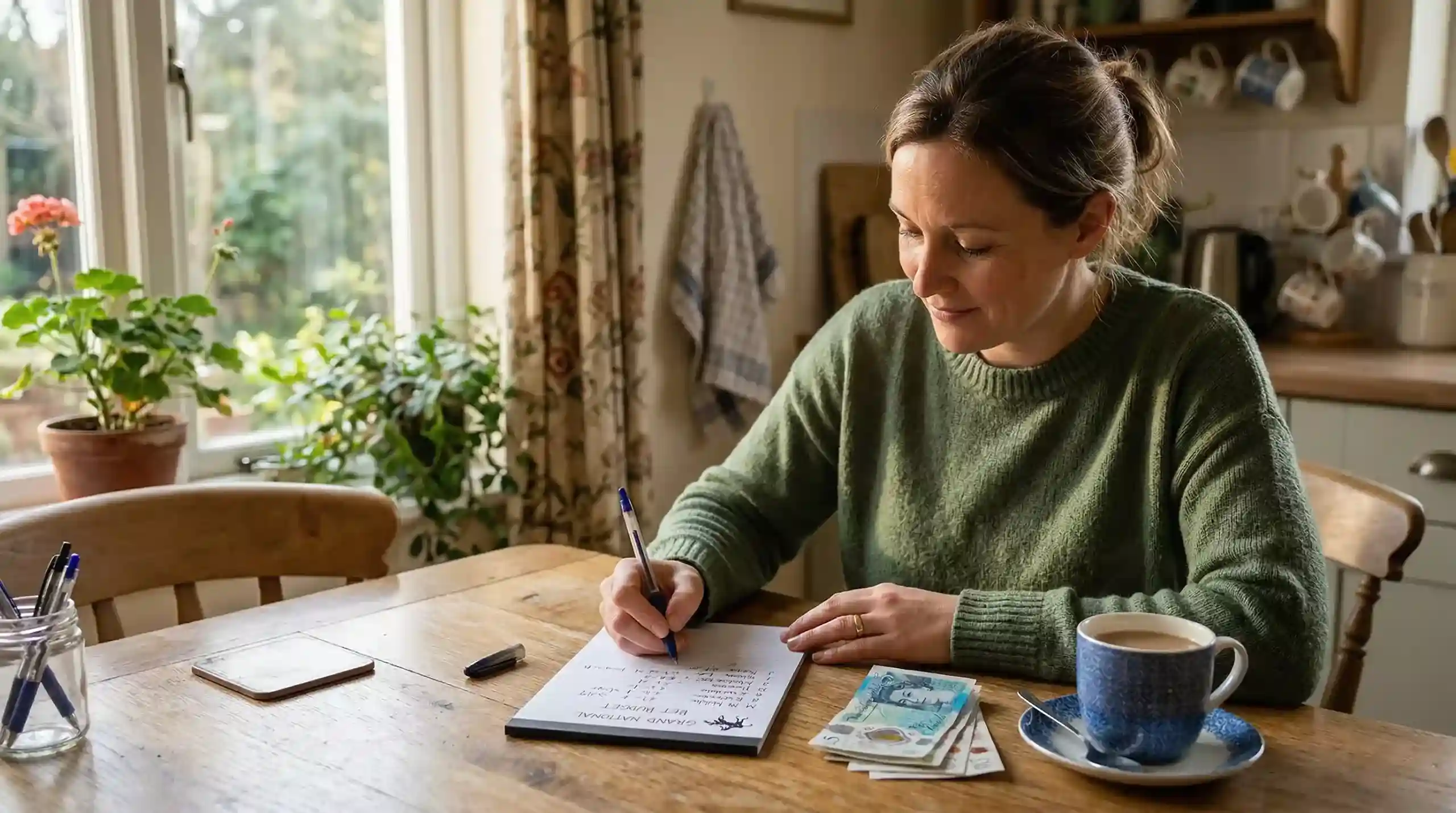
The Grand National is, for millions of people, the only horse race they bet on all year. That makes it an event, not a habit — and events have a tendency to override the sensible planning that people would normally apply to spending decisions. A person who carefully budgets their weekly shop might walk into Grand National Saturday with no clear idea of how much they intend to bet, place three or four impulse wagers over the course of the afternoon, and end the day having spent considerably more than they meant to. The fix is not willpower. It is structure. Set it before you bet: decide what you can afford to lose — not what you hope to win — and work backwards from that number.
This is not a lecture about restraint. It is practical advice about making the Grand National more enjoyable by removing the one thing that reliably ruins it: the sick feeling of having spent too much on a horse that fell at the sixth fence. According to Gambling Commission data, 82% of cash bets on the Grand National are staked at £5 or less. Most people already bet small. The goal of bankroll management is to make that small amount work intelligently rather than randomly.
Grand National Bankroll Management for Casual Bettors — More on this topic at grand national betting odds.
How to Set a Grand National Budget
Start with a number that, if you lost every penny of it, would not affect your week. For most casual bettors, this is somewhere between £10 and £30. That is your Grand National bankroll — the total amount available for the entire day, including any bets on undercard races at the Aintree Festival. Write the number down or set it as a deposit limit in your betting account before race day. The physical or digital act of committing to a figure makes it real in a way that a vague intention does not.
A common mistake is to set the budget per bet rather than for the day. A person who thinks they are “only betting £5” but places six separate £5 bets through the afternoon has spent £30 — potentially more than they realised or intended. The bankroll should be the ceiling for total expenditure, and individual bets should be sized within that ceiling.
For a £20 bankroll, a sensible structure might be: one main each-way bet of £5 (total £10 staked on the Grand National itself), one smaller win bet of £3 on a longshot, and £7 reserved for an undercard bet or a late adjustment if the going changes and you want to add a selection. That leaves nothing in reserve — which is the point. When the bankroll is gone, the betting is over. There is no reaching for the wallet to chase a loss.
If you are using a betting account rather than cash, set a deposit limit for the day through the app’s responsible gambling tools. Most licensed UK bookmakers allow you to set daily, weekly, or monthly deposit limits that cannot be increased without a cooling-off period. Setting a daily limit equal to your Grand National bankroll is the most reliable way to enforce your own budget, because it removes the temptation of a top-up deposit after a losing bet.
Stake Sizing for Different Bet Types
How you divide your bankroll depends on the type of bets you intend to place. An each-way bet costs double the unit stake — a £5 each-way bet is £10 total — so it consumes more bankroll than a win-only bet at the same unit. If your bankroll is £20 and you want to bet each-way, you can afford one or two each-way bets at £5 each, or you can drop to £2 or £3 each-way and spread across three selections.
For Dutching — splitting your stake across multiple horses to return the same profit regardless of which one wins — the bankroll is allocated as a single lump sum. A £15 Dutching budget spread across three horses at different odds might produce individual stakes of £6, £5, and £4 depending on the prices. The key advantage of Dutching for bankroll purposes is that your total outlay is capped: once the stakes are placed, there is nothing more to spend.
Longshot win-only bets are the cheapest in terms of bankroll consumption — a £2 win bet on a 33/1 outsider costs exactly £2 and returns £68 if it wins. For a casual bettor with a modest bankroll, allocating 10-15% to a longshot punt and the remainder to a more considered each-way bet on a mid-priced selection is a balanced approach that preserves the fun of a big-priced gamble without staking the entire budget on a low-probability outcome.
Matt Zarb-Cousin, co-founder of the self-exclusion app Gamban, has highlighted the broader issue of gambling regulation being insufficiently prescriptive in protecting consumers. For once-a-year bettors on the Grand National, the most prescriptive tool available is the one you apply to yourself: a fixed budget, set before the first race, enforced by the deposit limit on your account.
Using Deposit Limits and Cool-Off Tools
Every licensed UK bookmaker is required to offer deposit limits, time-out periods, and self-exclusion options. These are not emergency measures reserved for problem gamblers — they are practical tools for anyone who wants to control their spending. Setting a deposit limit of £20 for Grand National Saturday costs you nothing and prevents the most common overspend scenario: the mid-afternoon top-up after an early loss.
Time-out periods work differently. A 24-hour time-out locks your account entirely — you cannot bet, deposit, or withdraw until the period expires. This is more aggressive than a deposit limit and is suited to anyone who knows from past experience that they struggle to stop once they start. Activating a time-out on Sunday morning, the day after the Grand National, is a simple way to prevent the common pattern of chasing losses on other races the following week.
For those who want to go further, GAMSTOP provides a national self-exclusion scheme that blocks access to all licensed UK gambling sites for a period of six months, one year, or five years. This is a serious step and is designed for people who feel their gambling is beyond their control. But awareness of its existence is useful even for casual bettors: knowing that the backstop is there can provide reassurance. An estimated £10 million of Grand National betting in 2025 went to unlicensed operators where none of these protections exist — a reminder that sticking with licensed bookmakers is itself a form of bankroll protection.
Key Takeaway
Grand National bankroll management is not about reducing the fun — it is about ensuring the fun does not come at an unaffordable cost. Set a total budget for the day, divide it sensibly across your intended bets, use the deposit limit tool on your betting account, and treat the bankroll as a hard ceiling rather than a guideline. When the money is gone, enjoy the race as a spectator. The Grand National is a better experience when the stakes are within your means, and the best time to set those means is before the first race, not after the last one.
See also Grand National Mobile Betting.
