
 Available in US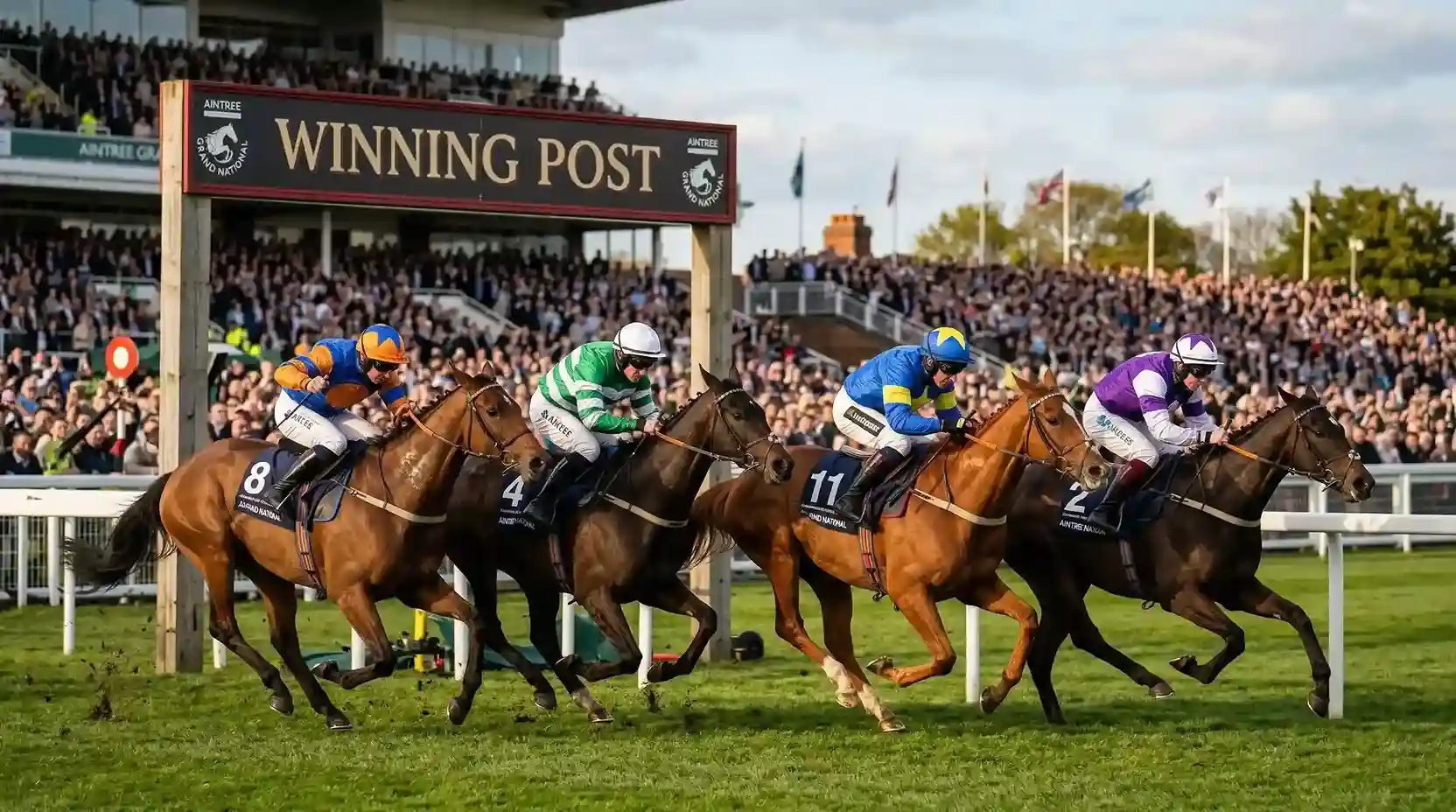
Each-way betting is the dominant bet type on the Grand National, and for good reason: with 34 runners over four miles of fences, the odds of picking the outright winner are steep, but the odds of picking a horse that finishes in the first four, five, six, or even seven are considerably more favourable. The crucial variable in any each-way bet is the place terms — how many places are paid and at what fraction of the win odds. These terms vary between bookmakers, and on the Grand National, the variation is wider than on almost any other race in the calendar.
Around £250 million is wagered on the Grand National in total, and the majority of that comes in each-way stakes. Entain data shows that 82% of cash bets on the race are staked at £5 or less — a profile that screams each-way rather than big win-only wagers. Understanding place terms, and knowing which bookmakers are offering the most generous ones, is the simplest way to improve your expected return without changing your selection.
Grand National Place Terms — More on this topic at grand national betting odds.
Standard vs Enhanced Place Terms Explained
Under industry-standard rules for handicap races with 16 or more runners, the place terms are one-quarter the odds for the first four places. This means if you back a horse each-way at 20/1 and it finishes in the top four, your place part pays out at 5/1 (one quarter of 20/1). The win part is lost, but the place return of 5/1 on your place stake gives you a profit on the overall bet — £10 each-way (£20 total) returns £60 on the place, for a net profit of £40.
Enhanced place terms improve on this standard in one or both of two ways: paying more places, paying a larger fraction of the odds, or both. For the Grand National, bookmakers commonly offer five, six, or even seven places instead of the standard four. Some extend the fraction as well, offering one-fifth the odds for extra places rather than one-quarter, though this is less common on the National specifically.
The difference between four places and seven places sounds incremental, but it is not. In a 34-runner Grand National, a horse finishing fifth, sixth, or seventh has cleared 30 fences over four miles and outperformed roughly 80% of the field. Under standard terms, that effort is unrewarded — your each-way bet loses on both parts. Under seven-place terms, the same finish triggers a place payout and turns a losing bet into a positive return. The additional three places represent three extra chances for your bet to produce something back.
How Extra Places Change the Maths
To see the effect clearly, consider a £5 each-way bet (£10 total) on a horse at 20/1. Under standard four-place terms at one-quarter odds, the place part pays 5/1 — a return of £30 (profit + stake) if the horse finishes in the top four. Under six-place terms at one-quarter odds, the same payout applies, but now for a top-six finish. The individual payout has not changed, but the probability of triggering it has increased substantially.
The increase in probability is where the real value sits. In a typical Grand National, roughly 20 to 25 of the 34 starters complete the course. If your horse is one of those finishers, its chance of being in the top four is materially different from its chance of being in the top six or seven. For a mid-priced runner at 20/1 — one with roughly a 5% implied win probability — the chance of finishing in the top four might be around 15-18%. The chance of finishing in the top seven, assuming it completes the race, could be 25-30%. That is a meaningful jump in the probability of getting a return, and it comes at no additional cost to you if the bookmaker is offering extra places as a promotion.
One subtlety worth noting: some bookmakers adjust the place fraction for the extra places. They might pay one-quarter odds for the first four places and one-fifth odds for places five through seven. Others maintain one-quarter across all places. The difference is not huge in absolute terms — on a 20/1 horse, the place payout drops from £25 to £20 for the fifth through seventh spots — but across multiple bets over multiple years, the fraction matters. When comparing offers, check both the number of places and the fraction applied to each.
There is a secondary effect that many bettors miss: the impact of extra places on your overall each-way strike rate. If you bet each-way on the Grand National every year at a bookmaker offering seven places, your place part will collect more frequently than at a firm offering four places. Over five or ten years of annual Grand National betting, the cumulative difference is significant. A punter who consistently takes seven-place terms might see a place return every two or three years. The same punter at four-place terms might wait four or five years between payouts. For casual bettors who bet small stakes on the National as a once-a-year event, a place return every few years rather than never is the difference between the race being an enjoyable tradition and a recurring disappointment.
Strategy: When Extra Places Matter Most
Extra places deliver the most value on mid-priced and longer-priced selections — the 14/1 to 33/1 range where Grand National winners frequently emerge. On a short-priced favourite at 6/1, the place payout at one-quarter odds (6/4) is modest regardless of whether you are paid four places or seven. On a 25/1 shot, the place payout at one-quarter (25/4 = 6.25/1) is substantial, and the extra places give you three additional chances to collect it.
This means extra-place promotions should influence your bet type, not necessarily your selection. If you have identified two or three horses you like for the Grand National, check which bookmakers are offering the most places on each. You may find that the best odds for your preferred horse are at a firm offering four places, while another firm has slightly shorter odds but seven places. In many cases, the seven-place offer is worth more in expected value than the two extra points of win odds.
Timing matters here too. Some bookmakers announce their extra-places promotions weeks before the Grand National. Others release them in the final days or on race-day morning. If you are betting early, check whether the NRNB market also carries extra places — a combination of NRNB protection and enhanced place terms is the most favourable structure available for an ante-post each-way bet. If you are betting on the day, compare the extra-places offers alongside the basic odds comparison. Places paid, fractions applied: those two numbers tell you more about the real value of your each-way bet than the headline win price.
Key Takeaway
Grand National place terms are not a minor detail — they are one of the biggest variables affecting your each-way return. Standard terms pay four places at one-quarter odds. Enhanced offers from bookmakers can extend that to five, six, or seven places, each additional spot representing a meaningful increase in your probability of getting paid. Compare the places offered and the fraction applied before committing your each-way stake. On a 34-runner race where the majority of bets are small and each-way, the bookmaker offering the most places is often giving you better overall value than the one with the best headline odds.
See also Grand National Sweepstake.
